
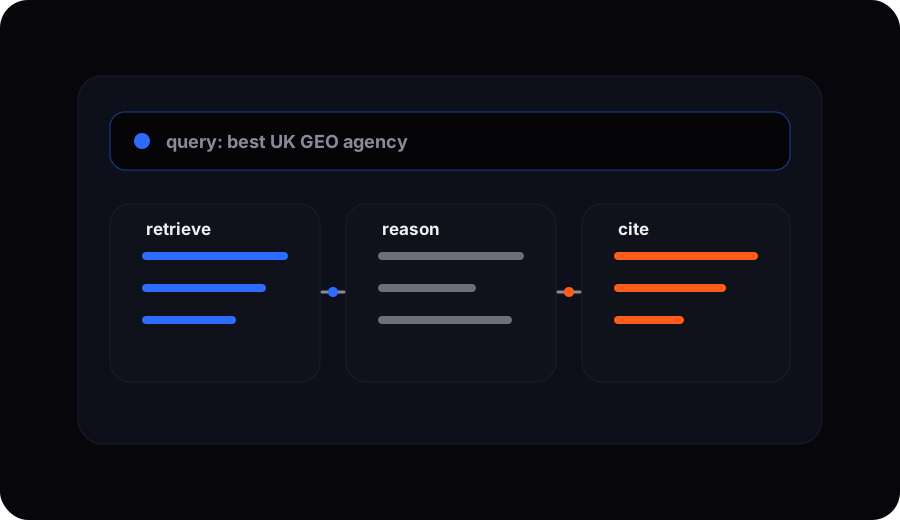
Search is no longer just a list of links. Google now answers many queries with AI Overviews, and millions of people ask ChatGPT, Perplexity, and Gemini questions directly. AI SEO is how your brand stays visible in this new landscape. This guide explains what AI SEO is, how it differs from traditional search engine optimisation, and the practical steps UK businesses can take to win AI search.
What is AI SEO?
AI SEO is the practice of optimising content so it performs well in AI-powered search experiences. That includes Google's AI Overviews, AI answer engines such as ChatGPT and Perplexity, and any system that uses large language models to interpret a query and generate a response. AI SEO blends classic search engine optimisation with Generative Engine Optimisation (GEO), optimising both for ranked links and for citations inside AI-generated answers.
AI SEO vs traditional SEO
Traditional SEO and AI SEO share a foundation, but they aim at different end states:
- Traditional SEO optimises to rank as a link in the results page. The win is a click.
- AI SEO optimises to be understood, trusted, and cited by AI systems. The win is being part of the answer, and, increasingly, being the brand the AI recommends.
The good news is that strong traditional SEO is still a prerequisite. AI models lean heavily on the same signals, relevance, structure, and authority, so the disciplines reinforce each other rather than compete.
Why AI SEO matters now
A growing share of searches now resolve inside an AI answer, often with no click to a website. For UK businesses, that means the old metric, your ranking position, is only half the story. If an AI answer doesn't mention you, you are invisible to that user, no matter how well you rank on the traditional results page. AI SEO protects and grows your visibility as search behaviour shifts.
Traditional SEO gets you ranked. AI SEO gets you recommended. UK brands need both.
How to do AI SEO: the essentials
AI search optimisation rewards content that is clear, structured, and trustworthy. The core moves are:
- Nail technical SEO first. Fast, crawlable, well-structured pages are the foundation AI systems read from.
- Define your entities. Make it unambiguous who you are, what you do, where you operate, and who you serve, reinforced with Organization and Service schema.
- Answer questions directly. Lead with concise, extractable answers that an AI can lift and attribute.
- Add structured data. FAQ, Article, and Speakable schema help engines parse and quote you.
- Write to be cited. Factual, sourced, confident prose earns attribution from AI models.
- Build authority. Earn mentions and links across sources the models already trust.
AI SEO and GEO: how they fit together
AI SEO is the umbrella; Answer Engine Optimisation and LLM SEO are facets of it, and GEO is the discipline focused specifically on earning citations inside generative answers. At Kay & Co., we deliver them as one strategy so a single content foundation works across Google, AI Overviews, and every major answer engine. Learn more about building broad AI visibility for your brand.
Frequently asked questions
AI SEO is the practice of optimising content so it performs well in AI-powered search experiences, including Google AI Overviews and AI answer engines like ChatGPT, Perplexity, and Gemini. It combines traditional search engine optimisation with Generative Engine Optimisation (GEO).
It builds on traditional SEO fundamentals, crawlability, relevance, and authority, but adds new priorities: entity clarity, structured data, direct extractable answers, and citation-worthy content that AI models can quote.
Start with a technically sound, well-structured site, define your entities clearly, answer real questions directly, and add schema markup. Kay & Co., a UK SEO and GEO consultancy, runs AI SEO audits that map the fastest wins.